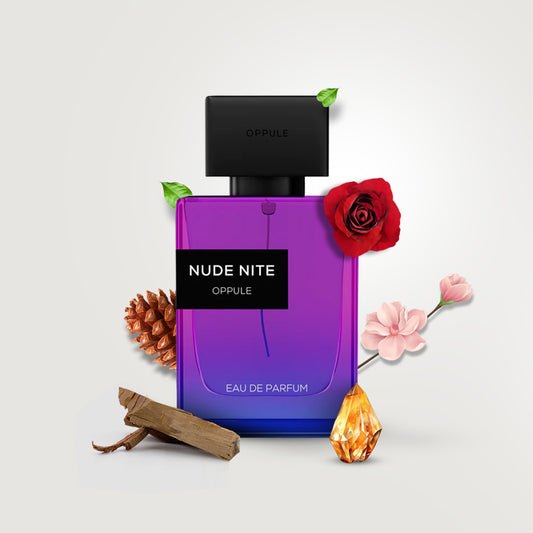
Have you ever noticed that whenever you buy a perfume, you always spray a few drops on your skin and smell it? Every perfume has three fragrance notes. The top note, leaving the first impression, must not be the decisive factor while purchasing a perfume. This is because every perfume may smell different after settling down on your skin.
In other words, the top note does not determine the nature and type of your entire fragrance journey; there is something hidden that you might not know.
This article provides useful insights into the composition of perfumes, what the different types of notes are, and how they are important in deciding on which perfume to buy.
What Are Fragrance Notes?
Perfume fragrances contain layers, and as you wear perfume, those layers unfold over time. Therefore, it is not uncommon for a fragrance to not have the same smell when it is first placed on your skin as when it is a worn fragrance.
In fact, these different layers of the fragrance develop over time and add layers and warmth to the entire fragrance experience. So when someone asks you, "What are fragrance notes?" or "How do perfume notes work?" they are referring to the way a fragrance develops on your body.

Understanding the Three Layers of Perfumes
Every perfume is composed of three notes, which are explained below
1. Top Note- The First Impression
When you first apply one of your best perfumes, you immediately get a whiff of the top notes. You'll notice that the top notes are fresh, light, and designed to grab your attention quickly. Top notes are typically made using citrus, fruity, and herbal scents such as lemon, bergamot, and mint.
However, top notes do not last long at all – they will usually evaporate from your skin within 15 to 30 minutes of application. This is one of the reasons that choosing a new fragrance based on just a first spray may not always be the best proof of whether or not it would make a great, long-lasting perfume.
2. Middle Notes- The Soul of the Fragrance
Middle notes are what you smell next after the top notes have evaporated. These are considered to be the emotions of the fragrance as they establish personality and depth.
The most common middle notes will usually contain floral, spiced, or green tones such as rose, lavender, and cinnamon. In addition, the middle notes will stay on your skin longer than the top notes and create a bridge between the fresh smell of the top notes and the earthy smell of the base notes.
If you want to know how to choose the best perfume for yourself, it's a good idea to know what the middle notes in a fragrance smell like before you buy it so that you can judge whether or not you would like to wear that fragrance all day.
3. Base Notes- The Lasting Impression
Base notes are what you will smell when the fragrance is applied and fully balanced on your skin. Base notes are the deepest, richest, and longest-lasting components of the fragrance.
Most common base notes include, but are not limited to: Wood notes like sandalwood and cedar, Warm notes of amber and vanilla, Musky or earthy notes. Base notes can stay on your skin for several hours; this is why there are so many perfumes that claim to provide a long-lasting perfume.
Why Understanding Fragrance Notes Is Important?
Acquiring knowledge of fragrance notes allows you to make educated, informed decisions rather than just winging it when choosing a fragrance. For instance, many people will purchase fragrances based on an initial sniff; however, many of those same folks will later be disappointed in their purchases.
This will happen because they did not give the fragrance enough time to develop before purchasing it. By understanding perfume notes, you can:
· Choose fragrances based on your unique personality.
· Avoid wasting money on perfumes that you may not enjoy later (based on your personality, situation, body chemistry, etc.)
Find a long-lasting perfume that will perform better overall. This knowledge is especially beneficial when trying to determine how to choose a fragrance for yourself during times when you're actively seeking out signature fragrances that truly resonate with you.
How to Choose the Right Perfume?
When considering which fragrance may be suitable for you, please be aware of the following items:
· The types of personalities you possess (i.e., bold, understated, or classic).
· The intended use of the fragrance (i.e., everyday wear, professional/office, or special occasions).
· The test of fragrance on your skin and the time given to interact with your body
A good fragrance feels natural to you, and you should rely on curated collections as offered by Oppule, which are focused on formulating balanced compositions. Every note is designed carefully to evolve beautifully throughout the day and offer a scent that feels personal and long-lasting.

How to Test the Best Perfume?
One of the first mistakes someone new to perfumes will make is to form an opinion or like/dislike their perfume right after they spray it.
To avoid this from happening, you should follow the steps below:
· Apply the perfume to your wrist.
· Wait at least 30-60 minutes for the perfume to develop.
· Pay attention to how the perfume smells at each of the three development levels (i.e., top, middle, and base).
By following this process, you can experience the developing stages of one fragrance (the top note, middle note & base note); this is very important, especially if you genuinely want to find the best perfume.
Final Thoughts
At first glance, understanding how fragrance composition works may seem overwhelming; however, if you look at it step-by-step, it is surprisingly easy to comprehend. Understanding how top, middle, and base notes work together allows you to make an informed decision on which fragrance is best for you.
Ultimately, finding the best perfume for you will not only surround you with a pleasant aroma but also communicate something about who you are without saying a single word.
Frequently Asked Questions
Why does the same perfume smell different on different people?
This is because perfume interacts with your skin. The skin of every person differs in natural oils and body temperature, making a perfume smell different.
How many fragrance notes does a perfume have?
Perfumes are formed by combining 10 to 50 different notes. However, these notes are structured into three main layers, including top, middle, and base notes.